Boiler Repair in Cambria Heights, Queens
When cold winds sweep across eastern Queens and your heating system locks out, you need prompt, skilled boiler repair in Cambria Heights, Queens. We diagnose burner ignition faults, restore steam radiator circulation, and solve complex hydronic pressure issues for single-family homes and multi-story residences throughout Cambria Heights, St. Albans, and neighboring communities.
Steam Boilers vs. Hot-Water Hydronic Boilers
In Cambria Heights, homes generally rely on one of two distinct central heating technologies. Accurately distinguishing between them is the essential first step in effective mechanical troubleshooting.
| System Feature | Low-Pressure Steam Boiler | Hydronic (Closed-Loop) Hot Water Boiler |
|---|---|---|
| Normal Pressure | 0.5 to 2.0 PSI (Controlled by Vaporstat / Pressuretrol) | 12 to 20 PSI (Maintained by automatic fill valve) |
| Circulation Method | Natural vapor expansion pushing air out of radiator vents | Electric centrifugal circulator pumps pushing water |
| Primary Water Indicator | External glass sight gauge tube showing active waterline | Combined temperature and pressure gauge (Tridicator) |
| Common Problems | Low-water lockouts, water hammer, flooded cast-iron blocks | Airbound baseboard loops, failing expansion tanks, pump seizure |
| Distribution Units | Cast-iron upright radiators with air release valves | Baseboard fin-tubes, convectors, or modern panel radiators |
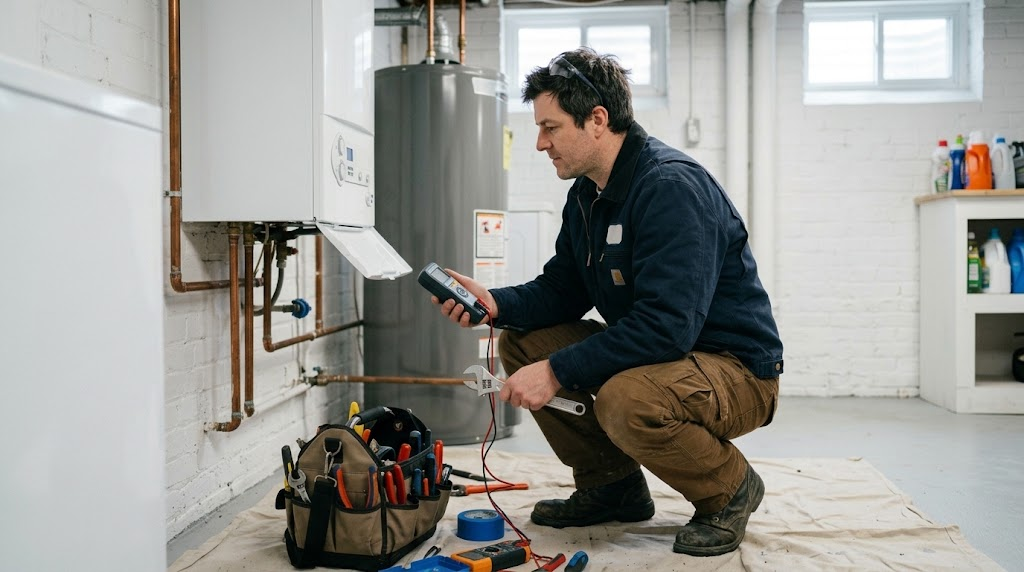
Whether your home requires steam boiler repair Cambria Heights Queens expertise or precision hot water boiler repair Cambria Heights Queens diagnostics, our technicians arrive equipped with specialized digital manometers, combustion analyzers, and acoustic listening equipment to isolate the problem.
Common Warning Signs Your Boiler Needs Professional Attention
Heating systems rarely fail without providing advance warning. Recognizing the signs early prevents freezing basements and costly emergency damage:
Total Absence of Heat
When experiencing a no heat boiler repair Cambria Heights Queens situation, the culprit can range from a blown 24V transformer or tripped low-water cutoff to a locked-out intermittent spark ignition module.
Loud Banging & Water Hammer
Metallic clanging through floorboards signals trapped condensate colliding with oncoming steam. Unpitched radiators, blocked main air vents, or boiler surging require physical realignment and chemical skimming.
Frequent Short-Cycling
A burner that fires for two minutes and shuts off before warming distant rooms indicates an oversized firing rate, a clogged pigtail siphon tube, or a defective high-limit aquastat switch.
Pressure Relief Valve Weeping
Discharge from the pressure relief pipe indicates excessive pressure or high thermal expansion. In hydronic systems, this almost always points to a collapsed expansion tank diaphragm.
Cold Radiators on Upper Floors
When first-floor rooms overheat while second-floor bedrooms remain cold, airbound piping loops or stuck radiator vent valves are preventing thermal energy from reaching the top of the house.
Yellow or Flickering Burner Flames
Gas flames should burn a steady, crisp blue. Lazy yellow flames indicate incomplete combustion, dirty burner orifices, or restricted combustion air intake, creating dangerous carbon monoxide risks.
Key Boiler Components & How They Fail
Modern gas boiler repair Cambria Heights Queens services involve testing individual electromechanical controls that protect the heating vessel from damage:
Burner Assembly & Electronic Ignition
Gas enters through a dual-seated solenoid valve and flows through precisely sized brass orifices into cast-iron or stainless steel burner tubes. Intermittent spark ignition modules or hot surface igniters light the fuel. Over time, oxidation coats the flame rectification sensor rod, causing the ignition module to shut down gas flow after three seconds because it cannot verify flame presence.
Low-Water Cutoff Controls (LWCO)
Operating as the primary life-safety control on every steam boiler, the LWCO cuts power to the burner if water drops below the safe operating level. Float-style cutoffs accumulate heavy sediment in their float bowls, which can prevent the internal switch from dropping. Electronic probe-style cutoffs require periodic descaling to prevent false low-water lockouts.
Circulator Pumps & Zone Relays
In hot-water boilers, multi-speed wet-rotor circulators move water through heating loops. Motor capacitors degrade, impeller bearings seize from mineral deposits, and mechanical seals weep water. Multi-zone homes with independent thermostats rely on switching relays to synchronize pump operation with burner demand.
Pressuretrols, Siphons & Aquastats
Pressure controls regulate steam production between 0.5 and 1.5 PSI. The brass pigtail siphon underneath the Pressuretrol traps water to protect sensitive bellows from live steam. When rust blocks this siphon loop, the control cannot sense boiler pressure, resulting in runaway high-pressure operation or immediate shutdown.
What Happens During a Professional Heating Service Visit
Systematic diagnostics ensure the underlying mechanical cause is resolved rather than temporarily resetting a tripped limit switch:
Symptom Review & Visual Check
We review the operating history with you, inspect water sight levels, check for active exterior leaks, and verify thermostat call signals.
Electrical & Safety Testing
We measure 120V line and 24V control voltage, test transformer output, verify LWCO switch continuity, and check limit switch calibration.
Combustion & Gas Evaluation
We test manifold gas pressure, clean flame sensors and pilot burners, inspect burner flames for complete combustion, and verify draft hood operation.
Operational Verification
After completing repairs, we cycle the boiler through a complete heating cycle, confirming radiator venting, proper pressure relief, and safe shutdown.
Repair vs. Replacement: Making a Rational Decision
Homeowners dealing with a boiler not working Cambria Heights Queens incident frequently wonder whether replacing parts or investing in a new heating plant makes more financial sense:
When Repair Is Practical
- The cast-iron heat exchanger sections are structurally sound with zero weeping push nipples or firebox cracks.
- The boiler is under 15 to 18 years old and has received regular seasonal water blowdowns.
- The malfunction is confined to modular external controls: thermocouple, gas valve, circulator, or Pressuretrol.
- Repair costs represent a minor fraction of complete system replacement expense.
When Replacement Is Advisable
- Cracked internal cast-iron block leaking water directly into the combustion chamber.
- Heavy sediment and mineral scale causing chronic surging, severe water hammer, and thermal stress fractures.
- The heating plant is 25+ years old with obsolete, unavailable replacement parts.
- The boiler was improperly sized for the home's radiator load during a prior conversion.
Learn more about complete sizing, conversions, and permits on our boiler replacement page.
Practical Boiler Maintenance & Prevention Guidance
Routine homeowner care preserves equipment longevity and minimizes mid-winter heating interruptions:
Steam Boiler Upkeep
- Weekly Low-Water Flush: Open the drain valve on your float-style LWCO for 10 seconds while the burner is running. Verify the burner shuts off and clear rusty sediment.
- Sight Glass Monitoring: Confirm water rests midway up the glass tube. Rapidly bouncing water signals foaming and surging that requires skimming.
- Air Vent Checks: Inspect radiator air vents for hissing or spitting water. Replace vents that remain cold or leak.
Hydronic Boiler Upkeep
- Pressure Gauge Inspection: Confirm system pressure reads between 12 and 18 PSI at operating temperature.
- Bleeding Radiators: Purge air from high radiator bleeder valves if upper sections feel noticeably colder than bottom sections.
- Expansion Tank Tap Check: Tap the side of your diaphragm expansion tank. The upper half should sound hollow (air) and the lower half solid (water).
For comprehensive seasonal service recommendations, visit our dedicated boiler maintenance page.
When a Heating Issue Requires Prompt Professional Attention
Certain heating symptoms represent immediate safety or structural concerns that should not be delayed:
If you smell the sulfur odor of natural gas or if your carbon monoxide alarm sounds, leave the building immediately. Do not operate light switches, do not touch electrical breakers, and do not attempt to turn off the boiler. Call 911 or National Grid from outside the home.
Soot Around Draft Hood
Black carbon soot streaks along the chimney connector or boiler jacket signal dangerous flue blockage and carbon monoxide backdrafting into your basement.
Rapid Water Feeder Cycling
An automatic water feeder that adds gallons of cold water daily indicates a serious subterranean return pipe leak, accelerating boiler metal corrosion.
No Heat in Sub-Freezing Weather
When outdoor temperatures drop below 25°F, plumbing supply lines along exterior walls can freeze within hours of boiler shutdown, risking catastrophic pipe bursts.
Boiler Service Tailored to Cambria Heights Residential Architecture
Cambria Heights is known for its quiet residential avenues, featuring detached and semi-detached single-family and two-family brick and wood-frame homes built primarily between the 1920s and 1950s. Whether along the busy corridors of Linden Boulevard and Francis Lewis Boulevard or in the quiet residential blocks near Montefiore Cemetery, most homes have full basements where central heating boilers and domestic water heaters operate side by side.
Because many of these homes originally featured coal gravity systems converted to oil and subsequently natural gas, basements often house complex distribution piping with long horizontal mains. Ensuring correct piping slope, unobstructed chimney draft, and properly functioning automatic water feeders is vital to keeping Queens families warm through harsh winter storms.
Comprehensive Heating & Plumbing Services for Cambria Heights
Boiler performance is deeply connected to radiator venting, domestic water heating, gas line integrity, and basement drainage. Explore our full range of services:
Boiler Replacement
Accurate heat load sizing, oil-to-gas conversions, and code-compliant installations engineered for Queens single-family and multi-family homes.
Explore Boiler Replacement →Steam Heat & Radiators
Cure violent water hammer, replace hissing air vents, and correct pitch angles on vintage cast-iron radiators.
Explore Radiator Repair →Water Heater Repair
Diagnose pilot outages, failing thermopiles, leaking relief valves, and restore domestic hot water quickly.
Explore Water Heater Repair →Sewer Line Repair
High-resolution video camera inspections, spot repairs, and replacement for damaged clay or cast-iron sewer laterals.
Explore Sewer Line Services →Sump Pump & Flood Care
Submersible sump pump installations, battery backups, and backwater valves to protect basements from groundwater surges.
Explore Sump Pump Solutions →Gas Line Repair
Certified pressure testing, gas piping repairs, appliance hookups, and NYC Local Law 152 periodic inspection compliance.
Explore Gas Line Services →Drain Cleaning
Motorized cable snaking and hydro jetting to clear stubborn kitchen, bathroom, and basement floor drain clogs.
Explore Drain Cleaning →Boiler Maintenance
Annual inspection of combustion controls, heat exchangers, safety switches, and water chemistry to maintain efficiency.
Explore Maintenance Guidance →Toilet & Faucet Repair
Stop running toilets, eliminate phantom flushing, replace dripping faucet cartridges, and rebuild seized shutoff valves.
Explore Fixture Repair →Nearby Heating Coverage Across Eastern Queens & Nassau Border
In addition to Cambria Heights, we provide responsive diagnostic visits to homeowners seeking boiler repair near St. Albans, boiler repair near Laurelton, Queens Village, and across the county border into Elmont.
Whether your residence is situated off Francis Lewis Boulevard, near Murdock Avenue, or within walking distance of the Belmont Park perimeter, our mobile service vehicles carry the diagnostic gauges, flame sensors, and universal controls needed to restore steady heat.
Frequently Asked Questions About Boiler Repair
Restore Reliable, Safe Heat to Your Queens Home
Don't endure freezing nights, unusual burner noises, or leaking heating pipes. Speak directly with an experienced heating professional to arrange a prompt diagnostic visit today.
Call (315) 202-8009