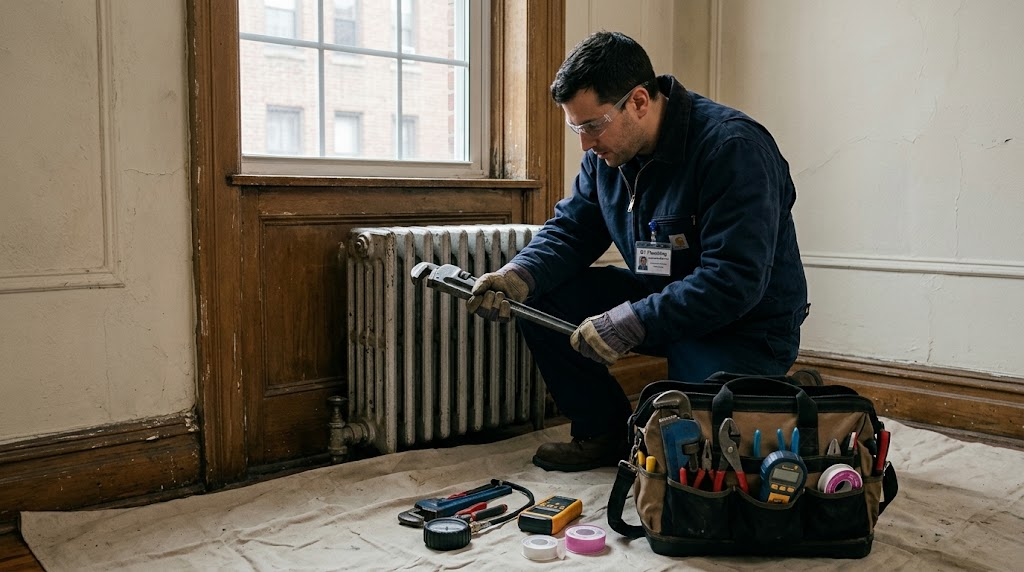
Cast-iron radiator servicing, valve stem packing repacking, and steam air vent calibration in Queens residential homes.
Quiet, Balanced Steam Heat for Cambria Heights Homes
Throughout Cambria Heights—from 115th Avenue down to Linden Boulevard—traditional single-pipe steam heating remains the dominant method of domestic winter comfort. When properly calibrated, a low-pressure steam system provides remarkably steady, comforting warmth. However, when individual components fall out of tune, homeowners experience violent banging noises, hissing vents that spit rusty water, and extreme temperature disparities between upstairs bedrooms and main floor living spaces.
Steam heating operates strictly by the physics of phase change and pressure differential. If air cannot escape a radiator freely, steam can never enter it. Conversely, if liquid condensate cannot drain back down the pipe toward the boiler unobstructed, high-velocity steam collides with trapped water, resulting in terrifying metal-on-metal hammering. Solving these challenges requires precise technical understanding rather than random valve adjustments.
Common Radiator Symptoms & Heating Imbalances
Homeowners frequently contact us when observing these specific steam heating complications:
- Loud Water Hammer & Banging Steam Pipes: Hearing aggressive banging inside floorboards or behind walls during boiler startup indicates banging steam pipes Cambria Heights Queens residents must have diagnosed before joints fracture.
- Completely Cold or Lukewarm Radiators: When the boiler is actively firing but specific radiators stay stone cold, air is trapped inside the cast-iron sections because the air vent has seized shut.
- Water Spitting & Hissing From Air Vents: Air vents should vent non-condensable air silently and seal tightly as soon as steam reaches them. Continuous hissing or spitting water indicates vent valve failure or radiator flooding.
- Leaking Radiator Shut-Off Valves: Puddles forming beneath the large brass supply valve typically stem from decomposed internal packing around the stem or failing union spuds. We provide expert steam radiator valve replacement Cambria Heights Queens properties require to protect flooring.
- Excessively Hot Rooms & Inability to Modulate Heat: Because single-pipe steam systems cannot be throttled with standard shut-off valves, installing calibrated thermostatic radiator valves (TRVs) or adjustable vents is necessary to achieve zoning balance.
Crucial Single-Pipe Valve Rule
In a single-pipe steam system, steam enters and water drains out through the exact same pipe! Therefore, the hand valve on your radiator must be kept either 100% fully open or 100% tightly closed. Never throttle the valve halfway in an attempt to cool down a room; doing so dams up returning water and triggers loud, damaging water hammer.
Step-by-Step Radiator Diagnostic & Repair Visit
When our heating technicians evaluate steam radiators in Cambria Heights, we execute a methodical inspection:
Radiator Pitch & Sloping Verification
Using a precision spirit level, we verify that the cast-iron radiator is pitched correctly toward the supply valve. Over years, floor settling in older Queens homes often causes radiators to slope backwards, pooling water and preventing steam entry.
Air Vent Testing & Main Line Vent Inspection
We test individual radiator air vents and basement steam main quick vents. If the main vents in the cellar are clogged, steam travels sluggishly into the branches, overworking the boiler and starving upstairs rooms.
Valve Stem Repacking or Replacement
Leaking shut-off valves are either repacked using high-temperature graphite cord or completely replaced with heavy-duty steam-rated gate or angle valves designed for high thermal expansion.
Steam Pressure & Vaporstat Calibration
Residential steam systems should operate under 2 PSI of pressure—frequently between 0.5 and 1.5 PSI. We inspect your boiler’s pressuretrol or vaporstat to ensure excessive pressure is not forcing water up into radiators.
System Warm-Up Balancing & Final Testing
The boiler is fired through a complete operational cycle. We monitor heat progression across every room, confirming that air vents close quietly and that zero banging or hissing remains.
Repair Versus Replacement: Radiator Assessment
Heavy cast-iron radiators are remarkably resilient and can often last for generations. The vast majority of radiator malfunctions involve external accessories—air vents, supply valves, union spuds, and pipe pitch—all of which are completely repairable.
Replacement of the actual cast-iron radiator is only required when the unit has suffered physical frost freeze fractures (typically occurring when a vacant home loses heat in freezing Queens temperatures) or when internal push nipples between sections corrode beyond repair. When a radiator must be replaced, we source compatible salvage cast-iron units or modern high-output architectural replacements properly matched to the room’s heating requirements.
Factors Influencing Radiator Repair Costs
Because steam repairs range from simple vent upgrades to complex pipe re-pitching, costs depend on clear project criteria:
- Single-Pipe vs. Two-Pipe Configuration: Two-pipe steam setups utilize thermostatic steam traps on the return elbow, which require specialized replacement elements.
- Piping Pitch Correction: If settling subfloors require raising heavy cast-iron radiators to establish proper drainage slope, specialized lifting jacks and pipe risers are needed.
- Valve Seizure & Pipe Threading: Corroded brass valves that have been untouched for forty years must be carefully removed using torch heating to avoid cracking the underlying iron riser.
- Air Vent Upgrades: Upgrading to adjustable multi-port venting or thermostatic radiator valves (TRVs) provides tailored room-by-room comfort.
Frequently Asked Questions About Radiator Repair
Can radiator banging crack pipes or cause leaks?
Yes. Violent water hammer generates shockwaves inside pipe joints that exceed several hundred PSI, which can loosen threaded fittings, fracture elbows in ceilings, and damage boiler water-feed controls over time.
Why does my radiator hiss constantly throughout the winter?
An air vent should only hiss briefly as cold air is pushed out by rising steam. Continuous hissing means the vent’s internal thermostatic float or bi-metallic disk has failed, allowing live steam to escape into your living space and wasting significant fuel.
What is the difference between steam radiators and hot-water radiators?
Steam radiators operate with vapor under low pressure, requiring an air vent to purge room air during each heating cycle. Hot-water (hydronic) radiators are completely filled with water circulated by a pump, featuring small bleeder valves rather than automatic steam vents.
Can you add a radiator to an unheated sunroom or basement room?
Yes, provided the boiler has sufficient spare heating capacity (EDR rating) and the new supply and return lines can be pitched with appropriate drainage slope back to the main.
Eliminate Banging Radiators & Cold Rooms
Don't suffer through another winter of noisy, unbalanced steam heat. Contact our experienced heating mechanics for prompt, accurate radiator repairs across Cambria Heights.
Call (315) 202-8009Complementary Heating Solutions
Radiator efficiency is directly coupled to your central boiler and burner controls. Explore our complete suite of Queens heating services:
When an aging steam boiler suffers cracked blocks or severe scale buildup, upgrade to a precisely sized modern heating plant.
Replacement Services →Maintain proper water line levels, perform low-water cutoff blowdowns, and optimize burner combustion.
Seasonal Maintenance →For comprehensive burner troubleshooting, visit our main boiler repair in Cambria Heights page or view our geographic service area on our Service Areas page.