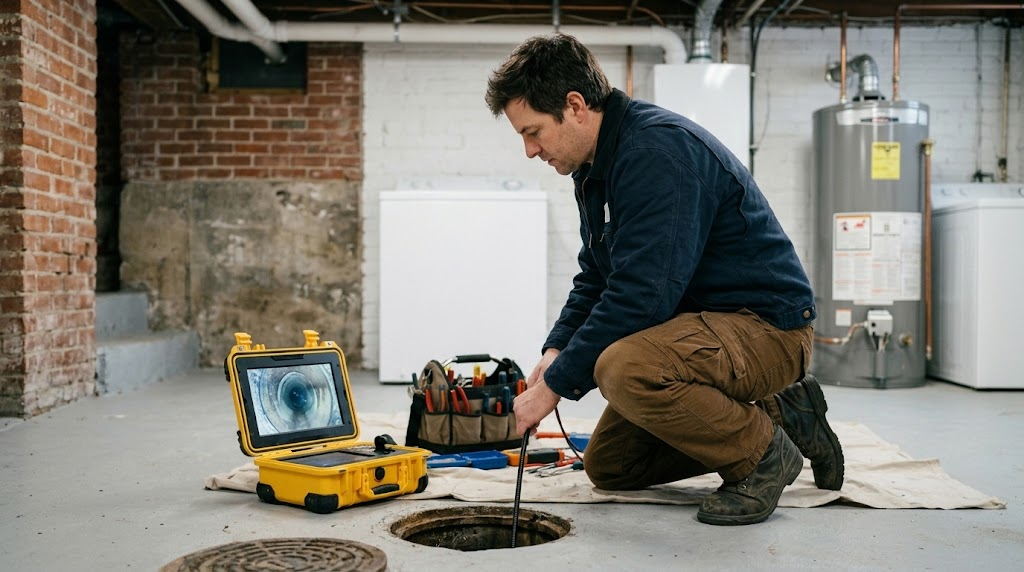
High-definition sewer video camera inspection and underground pipe rehabilitation in Queens residential properties.
Safeguarding Cambria Heights Homes Against Sewer Disasters
The residential architecture of Cambria Heights—featuring charming brick and fieldstone single-family homes built during the mid-20th century—relies on private underground sewer laterals connecting internal plumbing to city sewer mains buried beneath streets like 116th Avenue, 222nd Street, and Linden Boulevard. Many original connections were constructed using vitrified clay tile or heavy cast-iron piping.
Decades of ground settling, vehicular vibrations, and mature tree root growth frequently compromise these buried lines. Under NYC Department of Environmental Protection (DEP) regulations, property owners carry full legal responsibility for maintaining and repairing the entire house sewer connection from the interior basement foundation wall out to the municipal connection in the street. When waste drainage slows or stalls, prompt professional diagnosis prevents catastrophic raw sewage flooding.
Warning Signs of Compromised Main Sewer Laterals
Sewer issues typically announce themselves through identifiable preliminary symptoms before total basement inundation occurs:
- Multiple Simultaneous Fixture Backups: If running laundry or flushing an upstairs toilet causes wastewater to bubble up through your basement floor drain, utility sink, or first-floor shower, the main lateral is blocked. Call for immediate sewer backup repair Cambria Heights Queens services.
- Gurgling Sounds From Basement Plumbing: Air trapped behind an underground sewer blockage forces bubbling noises through toilet bowls and sink traps whenever household water drains.
- Persistent Sewer Gas Odors: Smelling hydrogen sulfide (rotten egg odor) in your basement or front yard indicates a crack or breached seal along the waste lateral pipe.
- Soggy Patches or Sinkholes in Front Lawns: A cracked or disconnected sewer pipe leaking beneath your front lawn or sidewalk erodes supporting soil, causing localized grass overgrowth or sinking pavement.
- Frequent Drain Stoppages Despite Snaking: If mechanical snaking only relieves clogs for a few weeks before recurring, dense tree root intrusion or a collapsed pipe section is the root cause.
Understanding Property Owner Responsibility in NYC
Many homeowners mistakenly believe the city repairs sewer pipes located between their sidewalk and the middle of the street. In New York City, the property owner owns the entire sewer lateral connection all the way to the city sewer main connection (the spur). Licensed Master Plumbers must pull street opening permits and DEP permits for repairs in the public roadway.
Precision Diagnostic & Repair Process: Step by Step
We take the guesswork out of underground plumbing through advanced diagnostic technology:
High-Resolution Sewer Camera Inspection
We deploy a fiber-optic video camera through your main cleanout. Our sewer camera inspection Cambria Heights Queens equipment reveals the exact depth, distance, and visual reality of pipe cracking, root intrusion, joint displacements, or bellies.
Mechanical Root Cutting or Hydro Jetting Cleansing
Heavy-duty spiral root-cutting blades or high-pressure hydro jetting scours away accumulated grease, calcified scale, and tree roots to restore full interior diameter and clarify structural pipe walls for repair evaluation.
Engineering the Repair Strategy (Spot Repair vs. Relining)
Based on video findings, we determine whether a localized trenchless spot repair, cured-in-place pipe (CIPP) lining, or targeted open-cut replacement represents the most durable and cost-effective approach.
Execution & Code-Mandated DOB / DEP Permitting
Work is performed to strict New York City plumbing codes. If roadway excavation is required, we manage NYC Department of Transportation (DOT) street opening permits, DEP inspections, and licensed restorations.
Post-Repair Video Verification & Flow Testing
Once repairs or lining are completed, we run a secondary camera through the pipe to provide visual confirmation of a seamless, unobstructed waste channel and test full household drainage capacity.
Repair Versus Complete Replacement: Making the Right Choice
Not every sewer problem necessitates digging up the entire front yard. We evaluate pipe condition pragmatically:
Localized Repair or Trenchless Relining: If an inspection shows that 80% of the cast-iron or clay pipe remains structurally round with good slope, but tree roots have penetrated one or two loose joint hubs near a sidewalk tree, localized excavation or trenchless epoxy sleeve lining can permanently seal the breaches without disturbing the entire lawn.
Complete Lateral Replacement: When an older pipe has suffered widespread channel rot along the bottom of the pipe (channeling), extensive shear collapses beneath the roadway, or severe back-pitch (a sunken belly holding stagnant water), complete pipe replacement from house to city curb or main is necessary to avoid recurring emergency backups.
Factors Influencing Sewer Line Project Costs
Underground plumbing repair pricing depends on measurable site factors rather than generic guesswork:
- Depth and Burial Distance: Sewer laterals in Queens typically lie between 5 and 12 feet underground. Deeper excavations require trench shoring and heavy machinery.
- Location of Damage: Repairs confined to your private front lawn cost significantly less than repairs extending beneath paved sidewalks or into the active traffic lanes of city streets.
- Street Opening & NYC Municipal Permits: Work in the public right-of-way requires NYC DOT street opening permits, traffic control plans, DEP connection fees, and asphalt restoration bonds.
- Trenchless Feasibility: If the pipe geometry allows cured-in-place epoxy lining, homeowners avoid the substantial costs of repaving driveways or re-landscaping lawns.
Frequently Asked Questions About Sewer Line Repair
Can chemical root killers permanently eliminate tree roots in my sewer?
No. Chemical treatments only burn away thin root tendrils temporarily. The structural cracks or open pipe joints remain fully exposed underground, allowing tree roots to grow back larger and more aggressively within months.
What is a sewer belly and why does it cause recurring backups?
A sewer belly is a sunken section of pipe caused by shifting soil or erosion. Because the pipe dips below the natural drainage slope, standing water and heavy waste solids pool in the depression, gradually accumulating toilet paper and triggering stoppages.
How does trenchless pipe lining work?
Trenchless CIPP (Cured-In-Place Pipe) lining inserts a flexible felt tube saturated with structural epoxy resin into the existing pipe. Once positioned, it is inflated with air or water and cured, creating a seamless, joint-free pipe-within-a-pipe that resists root penetration.
What immediate steps should I take if sewage backs up in my basement?
Cease all household water use immediately (stop running washing machines, dishwashers, sinks, and showers). Avoid touching standing wastewater without protective boots and gloves, keep children and pets away, and call our emergency dispatch line right away.
Schedule a Camera Inspection or Emergency Repair
Don't wait for raw sewage to flood your basement. Call our licensed sewer and drainage team for prompt video evaluations and durable underground piping solutions.
Call (315) 202-8009Complementary Drainage & Flood Prevention Services
Main sewer integrity is directly linked to internal branch cleaning and basement flood defense:
Clear stubborn kitchen grease, bathroom hair clogs, and localized branch pipe stoppages using electro-mechanical snakes.
Drain Cleaning →Protect your basement floor from stormwater intrusion and install sewer backwater valves to stop city main surcharges.
Flood Defense →Experiencing heating issues alongside plumbing concerns? Visit our primary boiler repair in Cambria Heights homepage or check regional service towns on our Service Areas page.