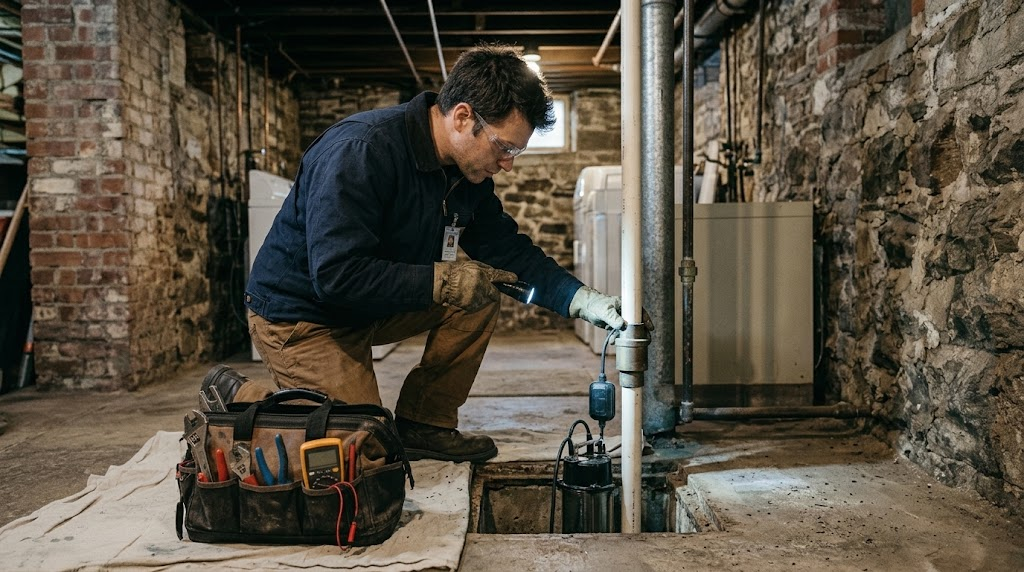
Submersible sump basin servicing, quiet check valve installation, and secondary battery backup pumping systems in Queens basements.
Defending Cambria Heights Basements Against Storm Inundation
Subterranean moisture and seasonal rainwater runoff represent severe hazards to residential properties across Cambria Heights. Many homes situated near local low spots—bordering St. Albans, Laurelton, and the Southern State Parkway approach—feature full cellars housing delicate heating boilers, hot water tanks, laundry equipment, and finished recreational rooms.
During severe nor’easters and torrential summer thunderstorms, rising local water tables exert hydrostatic pressure against basement floor slabs. Without a properly functioning submersible sump pump system, water forces its way through the cove joint where the floor meets the foundation wall. We provide dedicated sump pump installation Cambria Heights Queens homeowners rely on to discharge incoming water safely away from structural walls before flooding occurs.
Signs That Your Sump Pump or Drainage System Needs Service
Testing and servicing your basement pumping equipment before severe weather arrives prevents costly water damage:
- The Pump Fails to Activate During Rainfall: If the water level rises inside the sump basin above the pump motor casing without triggering the float switch, the electrical motor or switch has seized.
- Continuous Running or Rapid Short-Cycling: A pump that runs non-stop without water in the pit indicates a jammed mechanical float or a failed check valve allowing pumped water to fall right back into the basin.
- Loud Clunking or Vibrating Grinding Sounds: Grinding noises indicate that stones, grit, or debris have entered the pump impeller casing, bending blades or seizing the motor shaft.
- Visible Water Seepage Across the Floor Slab: Standing puddles around basement perimeters indicate that existing drainage trenches are blocked or that the pump capacity (GPM) is undersized for current hydrostatic volume.
- Lack of Battery Backup Redundancy: Depending entirely on 120V household electricity leaves your basement vulnerable when intense storms knock out power lines across Southeastern Queens.
Groundwater Seepage vs. Municipal Sewer Backup
It is critical to distinguish between two completely different sources of basement flooding. Groundwater seepage is rainwater rising from the soil, handled by a sump pump. Municipal sewer backup occurs when city street storm mains become overwhelmed, pushing filthy raw sewage backward through basement plumbing fixtures. Protecting against sewer backflow requires an approved backwater valve installation Cambria Heights Queens properties require.
Professional Sump Pump Diagnostic & Installation Visit
When our plumbing specialists inspect or upgrade basement flood defenses, we follow a comprehensive engineering checklist:
Basin Clearing & Sediment Removal
We extract accumulated silt, gravel, and construction debris from the bottom of the sump pit that could otherwise ingest into the impeller and destroy the motor bearings.
Motor Amp Draw & Float Switch Calibration
We test electrical amp draw to confirm the motor is running within safe manufacturer tolerances. Mechanical vertical float switches are inspected and adjusted for smooth travel.
Quiet Spring-Loaded Check Valve Installation
We install premium quiet spring-loaded check valves in the vertical discharge pipe to eliminate jarring water hammer thuds every time the pump completes a cycle and prevent backflow.
Dedicated Battery Backup System Commissioning
We install independent 12-volt marine deep-cycle battery backup pumps featuring computerized smart chargers, audible alarm sirens, and automatic float switches that take over instantly if power fails.
Discharge Piping & Freeze Guard Routing
We evaluate exterior discharge routing, ensuring pumped water is conveyed well beyond the building foundation and equipped with freeze-relief air gaps to prevent winter ice blockages.
Repair Versus Replacement: Pump Longevity
Submersible sump pumps are electromechanical devices that operate under harsh, submerged conditions. Minor issues—such as a tangled float switch, dirty intake screen, or leaking rubber check valve boot—are readily serviceable.
However, when a pump motor's internal oil-filled seal ruptures (often indicated by oily sheen on the water or thermal trip shutdowns) or when the unit has operated for more than seven to ten years, replacement with a heavy-duty cast-iron submersible pump is strongly advised. Proactively replacing an aged pump costs far less than remediating thousands of dollars in water-damaged drywall, flooring, and heating equipment.
Factors Influencing Flood Mitigation Project Costs
Flood mitigation investments vary according to the level of defense required:
- Pump Horsepower and Construction: Heavy cast-iron 1/2 HP or 3/4 HP commercial-grade submersible pumps provide higher gallons-per-minute (GPM) lift capacity than lightweight thermoplastic units.
- Battery Backup Redundancy: Adding a secondary DC pump, smart inverter, and sealed AGM marine battery provides multi-day protection during extended grid blackouts.
- Basin Excavation and Perforated Sump Liner: Installing a new sump pit where none existed requires breaking through the concrete floor slab, excavating soil, and bedding the basin in crushed stone.
- Backwater Valve Installation: Installing a sewer backwater valve requires excavating the main building drain, fitting an approved check valve assembly, and installing an accessible surface inspection sleeve.
Frequently Asked Questions About Sump Pump Service
How often should a residential sump pump be tested?
Homeowners should test their pump at least once every three months and immediately before anticipated severe weather. Pour 5 to 10 gallons of water into the sump basin until the float rises and verify that the pump activates smoothly and empties the pit rapidly.
Where should the sump pump discharge pipe exit the house?
Discharge pipes should exit through the foundation wall and drain onto a sloped grade at least 10 to 20 feet away from the foundation. NYC plumbing code prohibits discharging stormwater into municipal sanitary sewer fixtures.
How long does a backup battery run during a power outage?
A premium marine AGM deep-cycle battery typically powers a backup pump for 24 to 48 hours of intermittent operation, pumping up to 10,000 to 15,000 gallons of water on a full charge depending on cycle frequency.
Can a backwater valve prevent toilet backups in the basement?
Yes. An automatic sewer backwater valve installed on your main building drain stops surcharging street sewer mains from forcing raw sewage backwards into your basement floor drains, utility sinks, and basement toilets.
Prepare Your Basement Before the Next Storm
Ensure your sump pump, backup battery, and check valves are in peak condition before heavy rains arrive. Call our flood defense technicians today.
Call (315) 202-8009Complementary Drainage & Infrastructure Solutions
Comprehensive basement protection integrates stormwater pumping with waste drainage and heating safety:
Address cracked sewer laterals and tree root intrusions that cause municipal waste to back up into basement drains.
Sewer Services →Keep basement floor drains, perimeter channels, and cleanouts flowing cleanly without sediment blockages.
Drain Cleaning →Need help with your basement heating equipment? Visit our dedicated boiler repair in Cambria Heights homepage or explore nearby service communities on our Service Areas page.