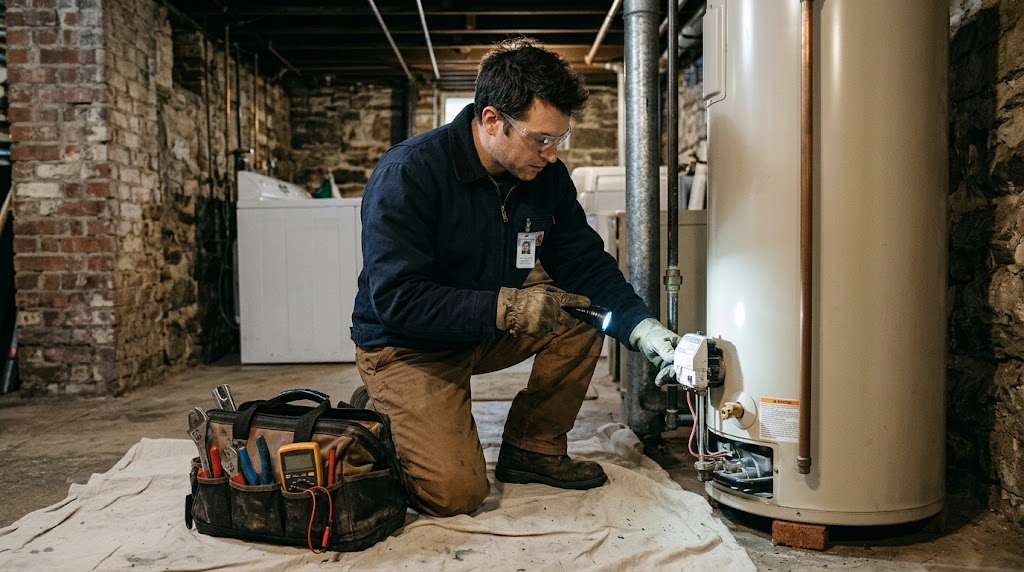
Diagnostic troubleshooting for gas burner controls, relief valves, and domestic water heating tanks in Queens basements.
Reliable Hot Water Solutions for Cambria Heights Households
Few plumbing failures disrupt daily domestic routines more quickly than a sudden loss of hot water. In single-family and duplex homes throughout Cambria Heights—from Francis Lewis Boulevard east toward Elmont and south toward Laurelton—hot water is generated either through dedicated gas-fired atmospheric storage tanks, electric residential tanks, or indirect hot water storage tanks connected directly to central hydronic boilers.
When a water heater malfunctions, proper diagnosis depends on identifying the exact energy source and mechanical mechanism. We specialize in comprehensive hot water heater repair Cambria Heights Queens residents trust to pinpoint whether a problem stems from an extinguished pilot light, a defective gas control valve, burned-out electric immersion elements, or sediment fouling within the tank.
Warning Signs That Your Water Heater Requires Service
Prompt attention to emerging water heater symptoms prevents sudden cold showers and water damage to basement storage:
- Complete Absence of Hot Water: Experiencing an acute no hot water repair Cambria Heights Queens situation typically indicates a tripped safety limit switch, failed thermocouple, defective electronic igniter, or burnt-out electric element.
- Water Puddling Around the Base: If you observe a water heater leaking Cambria Heights Queens basement, immediate inspection is essential. Leaks may originate from serviceable brass fittings or signal structural tank failure.
- Fluctuating or Rapidly Depleting Water Temperatures: Taking a shower that turns lukewarm within minutes often points to a broken internal dip tube, which allows cold incoming supply water to short-circuit directly to the hot outlet fixture.
- Popping, Sizzling, or Rumbling Sounds: Heavy mineral scale accumulation on the bottom of the tank creates insulated pockets where water boils into steam bubbles that pop violently during firing cycles.
- Discolored, Rusty, or Foul-Smelling Water: Rusty hot water accompanied by clear cold water indicates that the sacrificial magnesium anode rod inside your tank has fully dissolved, allowing tank steel to corrode.
Critical Safety Reminder for Homeowners
Water heaters incorporate combustible fuel, high-voltage electricity, and pressurized boiling water. Homeowners should never attempt to dismantle gas valves, bypass high-limit safety cutoffs, or manually rewire electric elements. If you smell gas or observe active electrical arcing, shut off the supply valve or breaker and call our qualified technicians immediately.
Diagnostic Procedures for Gas and Electric Systems
Because heating mechanisms differ fundamentally, diagnostic protocols are tailored strictly to the equipment type:
Gas Equipment Diagnostics (Gas Water Heater Repair)
For gas water heater repair Cambria Heights Queens homes, we inspect the pilot assembly, clean carbon buildup from the thermocouple or thermopile, test millivolt electrical generation, check burner combustion airflow, and test the electronic gas control valve for proper modulation.
Electric Equipment Diagnostics (Electric Water Heater Repair)
For electric water heater repair Cambria Heights Queens properties, we test 240V supply voltage, measure resistance across upper and lower heating elements with a calibrated digital multimeter, test high-limit reset switches, and replace failing thermostats.
Temperature & Pressure (T&P) Relief Valve Testing
The T&P valve is the primary safety guard protecting the tank from explosive over-pressurization. We verify that the valve seat is free of scale, not weeping, and piped safely toward the floor drain.
Boiler-Coupled Indirect Tank Inspection
If your hot water relies on an indirect cylinder, we check the boiler's domestic hot water priority relay, zone circulator pump, and internal heat exchanger coil to ensure optimal heat transfer from boiler water to potable water.
Repair Versus Replacement: Clear Assessment
When deciding whether to repair or replace a malfunctioning water heater, the physical origin of the fault is decisive:
When Repair Is Appropriate: Component malfunctions—such as failed thermocouples, faulty thermostats, bad heating elements, leaking drain valves, worn dip tubes, or defective gas control valves—can be cost-effectively replaced on tanks whose steel vessel remains structurally sound and rust-free.
When Replacement Is Necessary: If water is seeping from the welded seams of the tank cylinder or leaking out through the jacket insulation around the burner tray, the glass-lined steel shell has ruptured. Storage tanks cannot be safely welded or patched; immediate replacement is required to avoid sudden catastrophic basement flooding.
Factors Influencing Water Heater Repair Costs
We explain repair considerations transparently without hidden surprises:
- Equipment Type: Standard atmospheric gas units utilize mechanical controls, whereas power-vented or high-efficiency condensing units require specialized electronic boards and combustion blowers.
- Access and Piping Condition: Older basement installations with corroded galvanized nipples or non-compliant shut-off valves may require brass transition upgrades to prevent electrolytic corrosion.
- Sediment Flushes: Flushing heavily compacted sediment from older tanks requires chemical de-liming or reverse pressure flushes to restore heat transfer.
- Electrical or Gas Supply Upgrades: Correcting undersized gas supply lines or updating circuit breakers to match element wattages.
Frequently Asked Questions About Water Heater Repair
How long does a residential water heater typically last in Queens?
Most traditional storage water heaters provide 8 to 12 years of dependable service. Performing annual tank flushes and replacing the sacrificial anode rod before it dissolves can significantly extend cylinder longevity.
Why does my water heater pilot light keep going out?
The most frequent culprit is a worn thermocouple or dirty pilot orifice that fails to generate sufficient millivolt current to hold the internal gas safety magnet open. Draft backdrafting down the chimney can also snuff the flame.
What temperature should my residential water heater be set to?
The U.S. Consumer Product Safety Commission recommends 120°F (49°C) to prevent scalding while providing sufficient temperature for household washing. If someone in the home is immunocompromised, 140°F with anti-scald thermostatic mixing valves is recommended.
Why does my water heater leak from the brass valve near the top?
That is the Temperature and Pressure (T&P) Relief Valve. It drips when either thermal expansion builds excessive pressure inside a closed plumbing system (requiring an expansion tank) or when the valve seat has accumulated scale and can no longer seal.
Need Hot Water Restored Promptly?
Don't tolerate ice-cold showers or risk water leaks in your basement. Call our experienced Queens technicians for immediate diagnostic evaluations and dependable repairs.
Call (315) 202-8009Related Mechanical & Infrastructure Services
Water heaters interact closely with fuel piping and central heating boilers. Discover our complete technical solutions:
Safe appliance connections, gas shutoff valve installations, and code-mandated gas pressure integrity tests.
Gas Line Services →Consider upgrading to an integrated indirect water heating tank when installing a new high-efficiency heating boiler.
Boiler Solutions →For heating emergency support, visit our primary boiler repair in Cambria Heights homepage or review our nearby service routes on our Service Areas page.